Computer Vision, Retail Intelligence, Data Systems
Scope
End-to-end retail intelligence system
Role
Computer vision, backend pipeline, dashboard, system design
Summary
Overview
RIOS is an end-to-end retail intelligence system built around a gap in most store analytics: retailers usually know what sold, but not what customers considered, touched, held, removed, or ignored before purchase. The system combines computer vision, backend services, retail data workflows, dashboards, and AI-assisted reporting to connect shelf behavior with business context.
Traditional POS systems show completed transactions, but they miss lost intent before checkout. RIOS was designed to make pre-purchase shelf behavior measurable and useful for decisions around placement, replenishment, pricing, and conversion analysis.
Attention without purchase can reveal hidden conversion gaps.
Strong shelf interaction may signal stock, price, or placement issues.
Behavior signals give inventory and sales decisions more context.
02
Hackathon context
AIIC 2026Team Decipher4 membersend-to-end system
RIOS was developed during the Applied Artificial Intelligence Innovation Challenge 2026 as a team project. The goal was to turn a broad retail analytics idea into a working full-stack AI system connecting computer vision, backend services, dashboards, and decision support.
Built by Team Decipher during AIIC 2026.
Worked as a 4-member team combining 3 ICT and 1 Business Students.
Focused on delivering a real system flow rather than only a model demo.
Delivered a working workflow across computer vision, IoT exploration, analytics dashboards, and AI-assisted reporting.
Team Decipher during AIIC 2026.
03
System flow
camera feedbackend processingdecision support
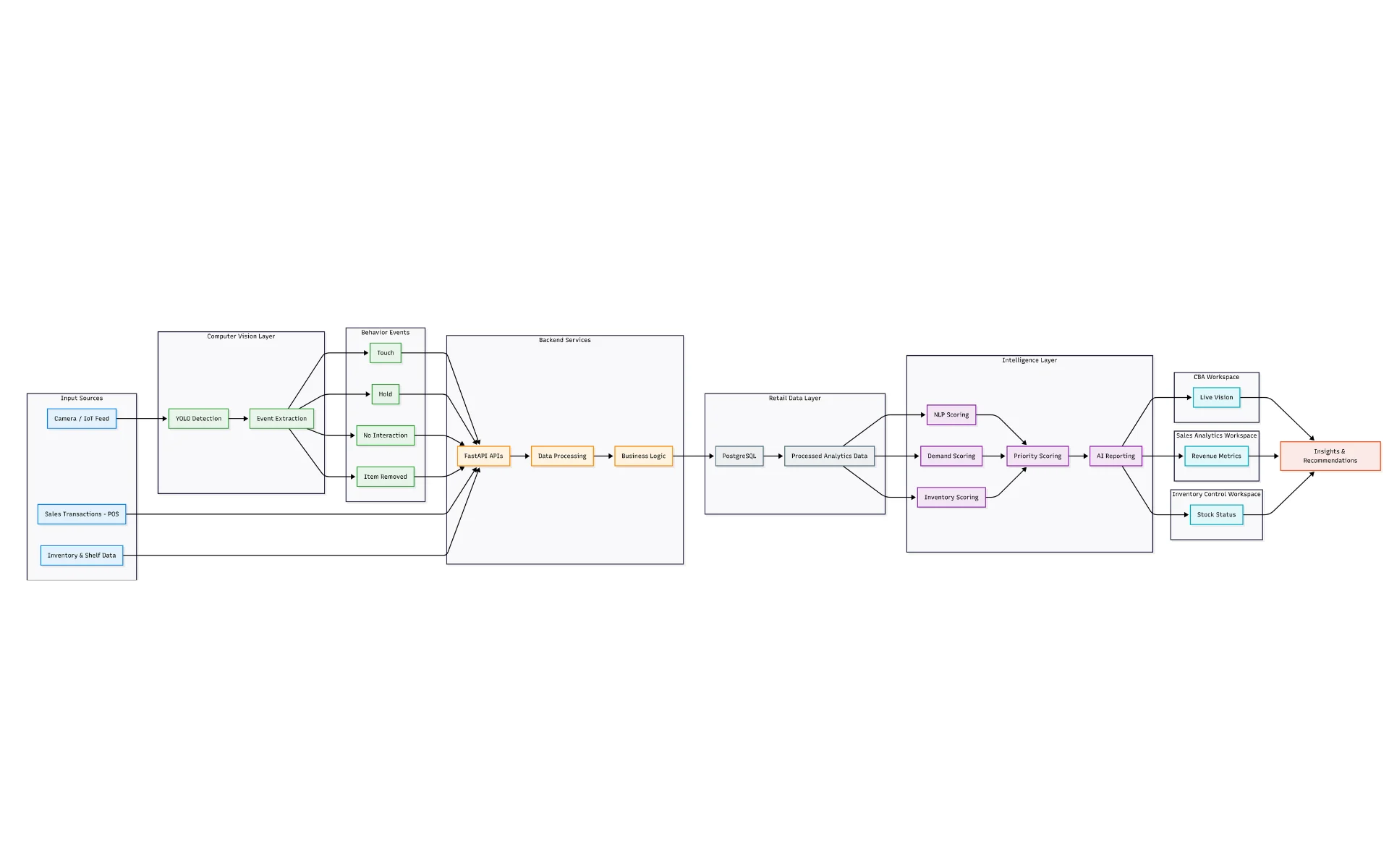
RIOS connects physical shelf activity with analytics and decision support through a full behavior-to-insight pipeline.
Camera or IoT feed produces shelf-level visual input.
YOLO detection converts video frames into behavior events.
Behavior events are combined with sales and inventory data.
Processed signals feed dashboards, scoring logic, and AI-assisted reports.
Stage
Purpose
Detection
Captures shelf interaction behavior from camera input
Processing
Turns detection output into structured behavior events
Data layer
Connects behavior signals with sales and inventory context
Intelligence layer
Scores demand, inventory pressure, and priority
Output
Supports dashboards, insights, and AI-assisted recommendations
System workflow showing how camera input, retail data, backend processing, dashboards, and AI-assisted reporting connect into one decision pipeline.
04
Data collection
CVATvideo-level splitretail shelf footage
The vision dataset was collected manually in real retail environments to support behavior-level detection rather than generic object detection.
Collected 11 source videos from shelf-facing retail scenarios.
Annotated 10 videos using CVAT, with 1 video reserved for testing.
Used video-level splitting to reduce leakage across similar scenes.
Focused on behavior classes such as no interaction, touch, hold, and item removal.
Split
Coverage
Training
7 videos / 9,554 images
Validation
3 videos / 3,024 images
Testing
1 held-out video
05
Computer vision layer
YOLObehavior detectionretail shelf events
The computer vision layer detects shelf-level interaction behaviors and converts them into usable behavior signals for the wider retail system.
Uses an Ultralytics YOLO pipeline for custom retail behavior detection.
Turns frame-level detections into behavior events such as touch, hold, and item removed.
The model acts as the signal generator for the retail intelligence pipeline.
Class
Meaning
No interaction
Customer is near the shelf but not interacting with the item
Touching shelf
Customer touches or reaches toward shelf/product area
Holding product
Customer holds or considers a product
Item removed
Product is removed from the shelf area
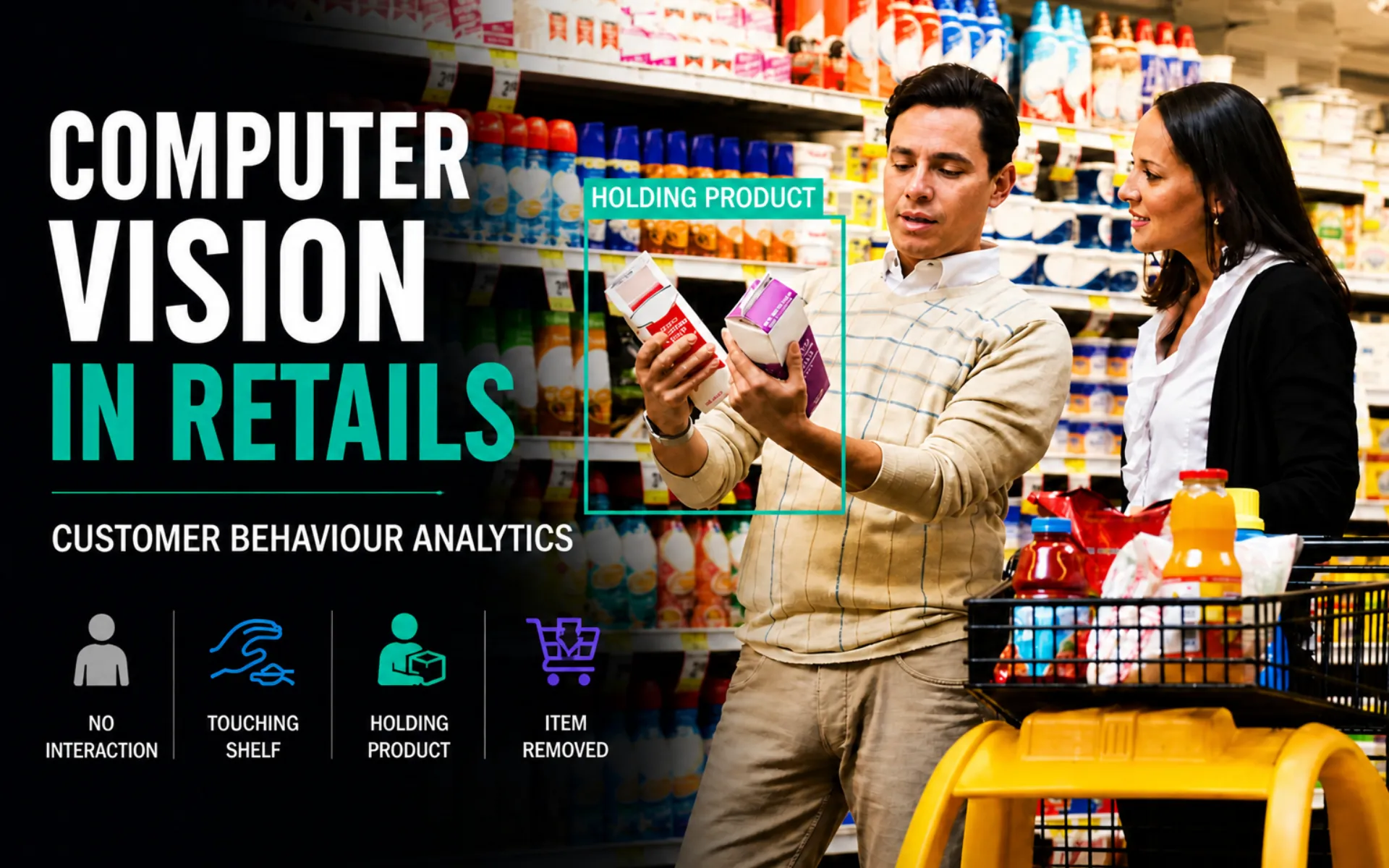
Combined model/testing visual showing the custom retail behavior detection setup and output examples.
06
Test samples
test samplesbehavior eventsretail shelf footage
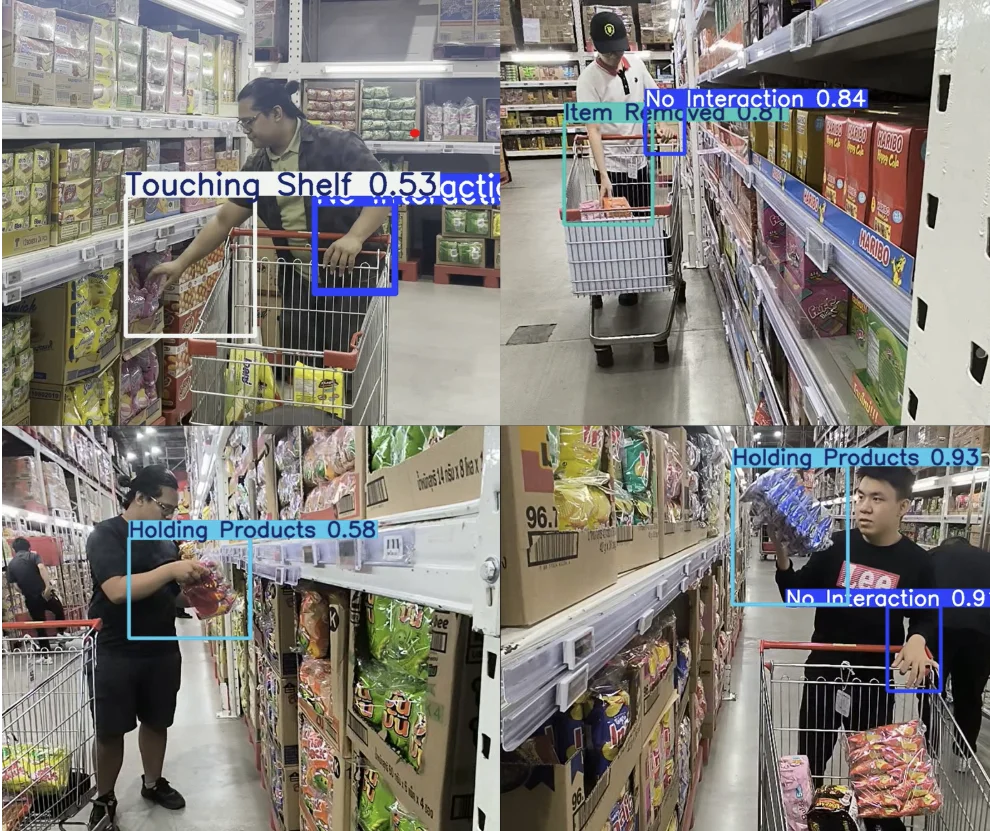
These test samples show the detection model running on held-out retail shelf footage, making the behavior detection output easier to understand visually.
Test sample 1 showing the model detecting shelf-level customer behavior.
Test sample 2 showing behavior detection across a separate retail shelf test.
Test sample 3 showing another held-out sequence for shelf interaction detection.
07
Model training and evaluation
precisionrecallmAP@50confusion matrix
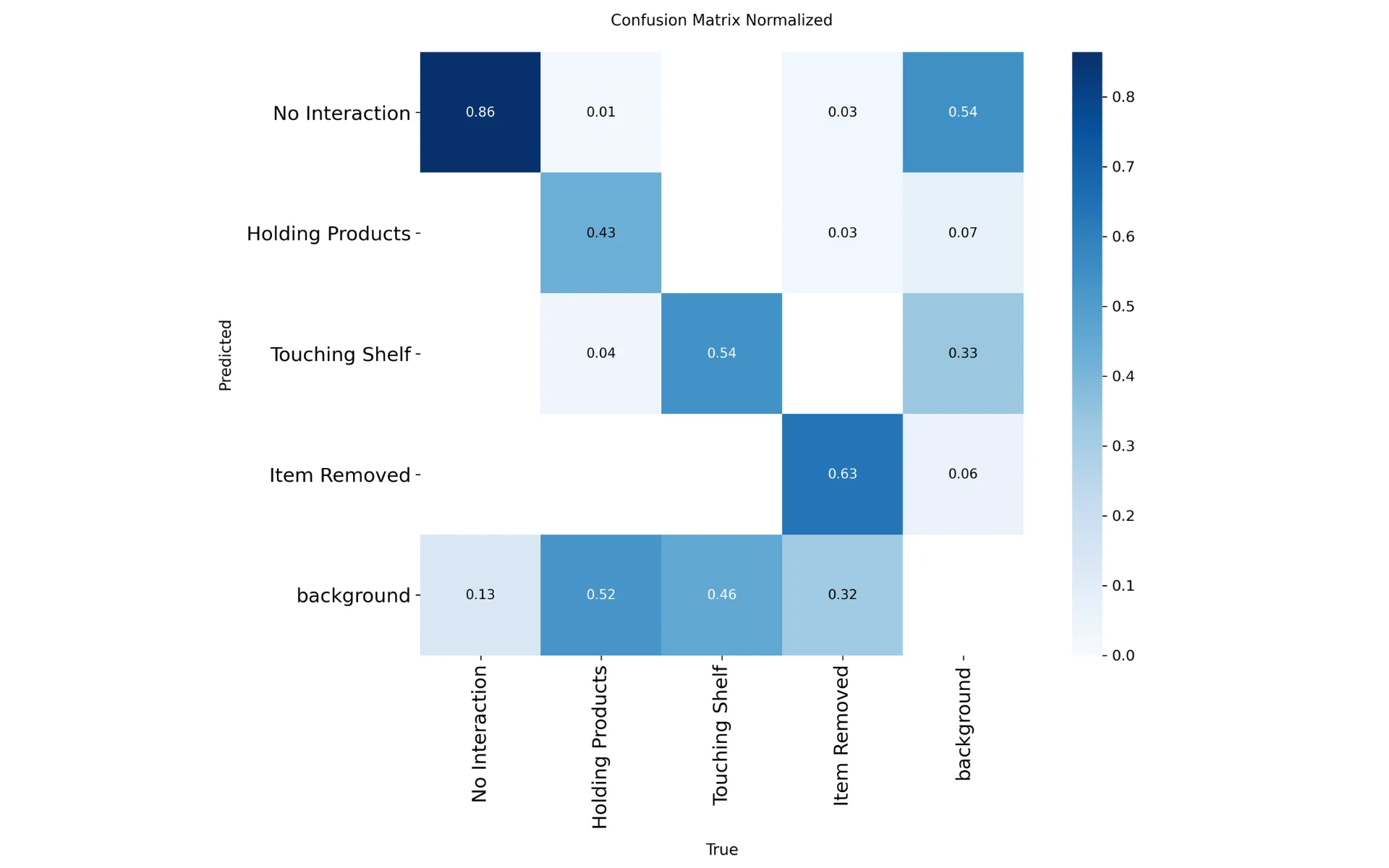
The custom YOLO model was evaluated using standard detection metrics and visual diagnostics to understand class-level behavior performance.
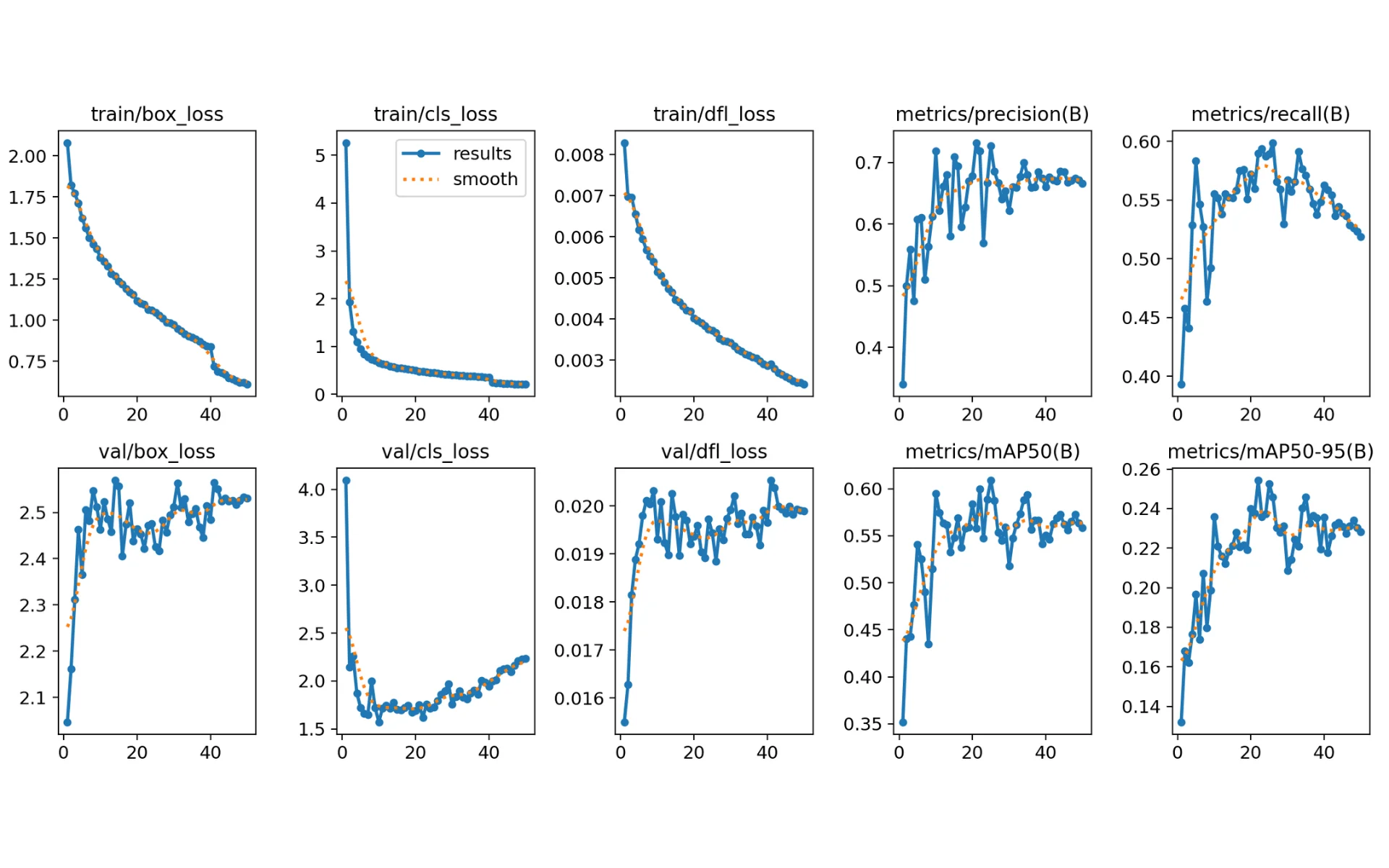
Trained for 50 epochs, with best observed performance around epoch 25.
Visually distinct actions such as item removal were easier than subtle actions such as touch versus hold.
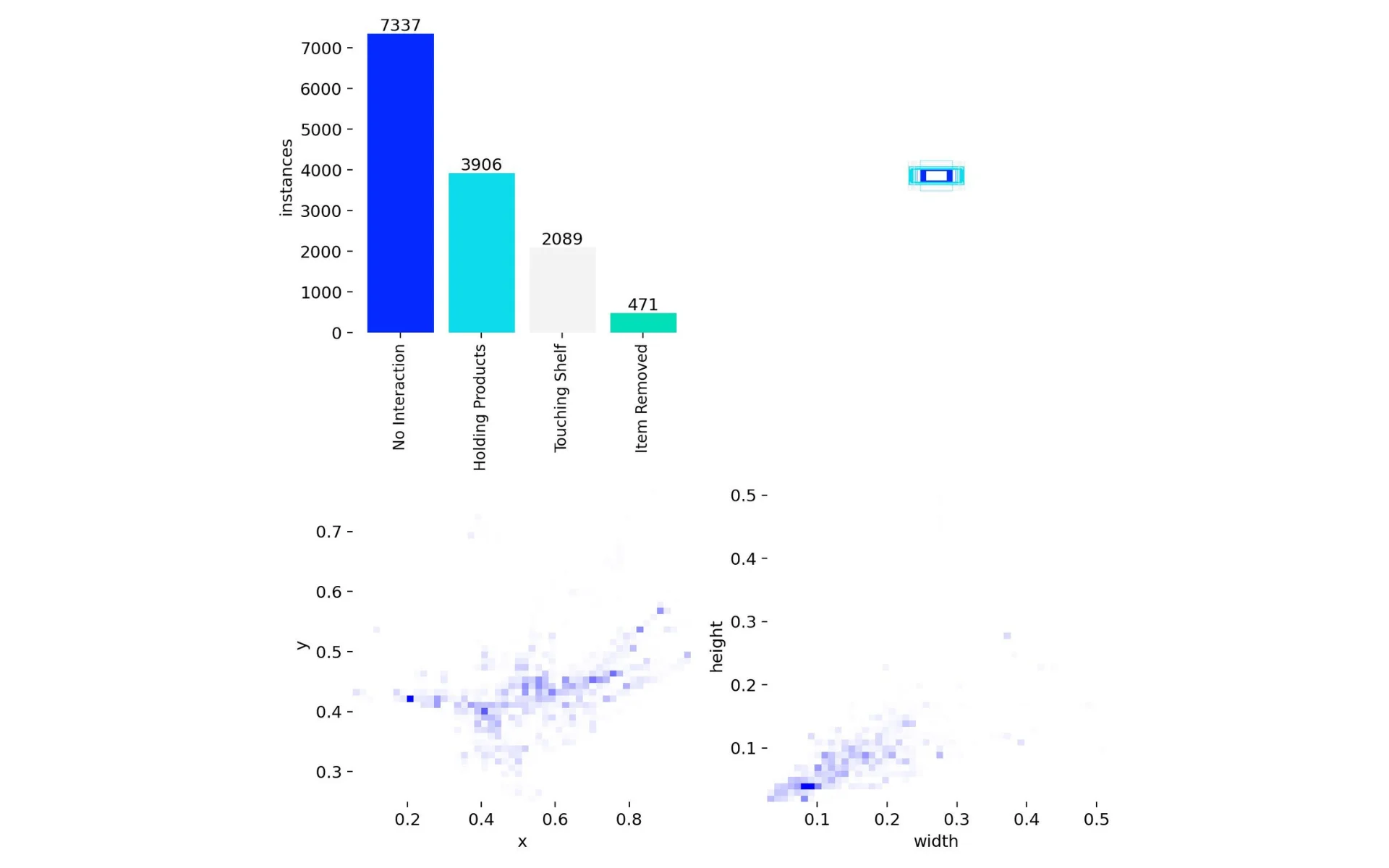
Evaluation visuals were used to inspect class confusion, training behavior, and label quality.
Metric
Best Value
Precision
0.7269
Recall
0.5895
mAP@50
0.6091
mAP@50-95
0.2525
YOLO training results showing loss curves, precision, recall, and mAP metrics.
Normalized confusion matrix used to inspect behavior class performance.
Dataset label overview showing class distribution and bounding box placement patterns.
08
Pipeline and dashboard
behavior eventsdashboard workspacesAI summaries
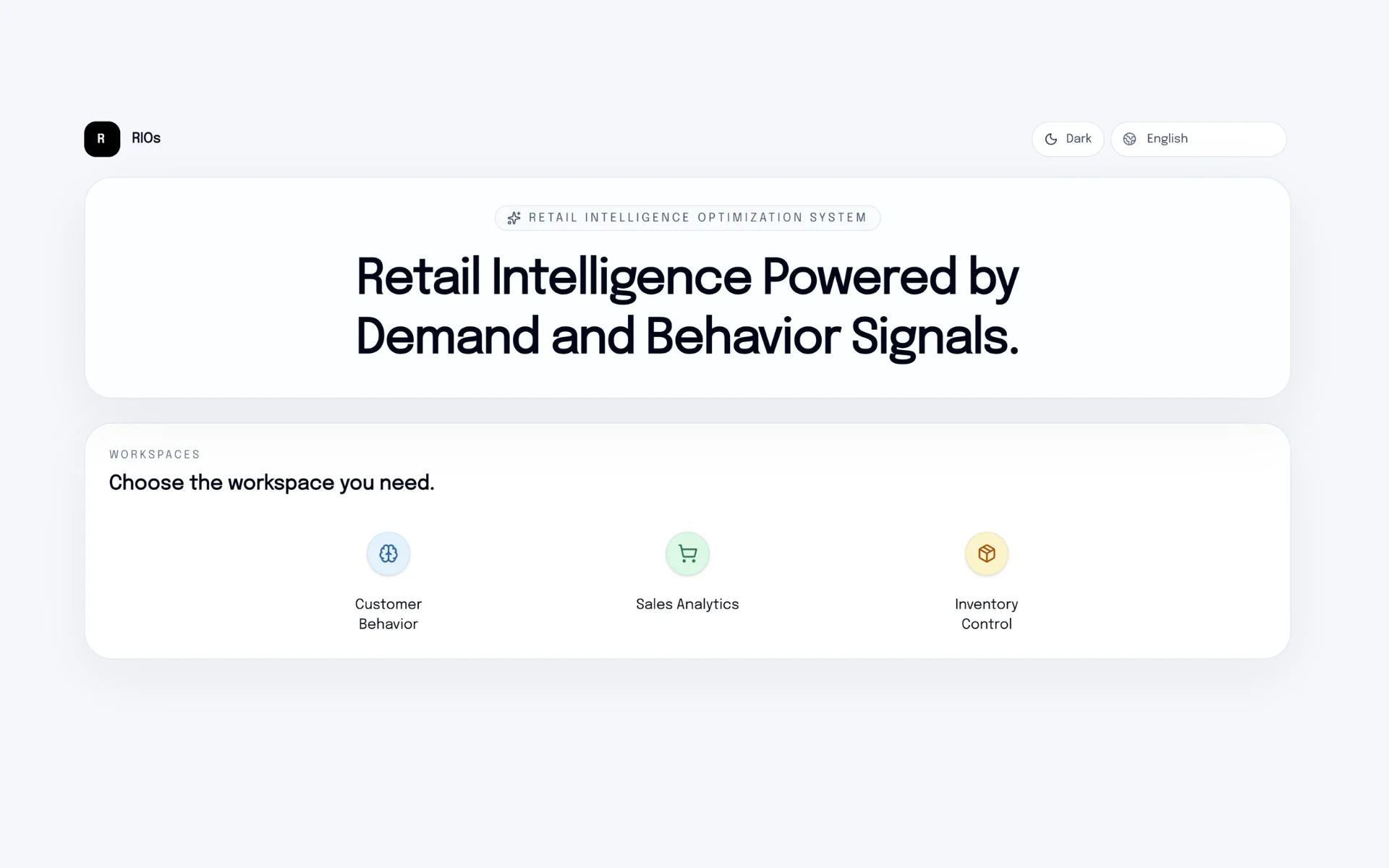
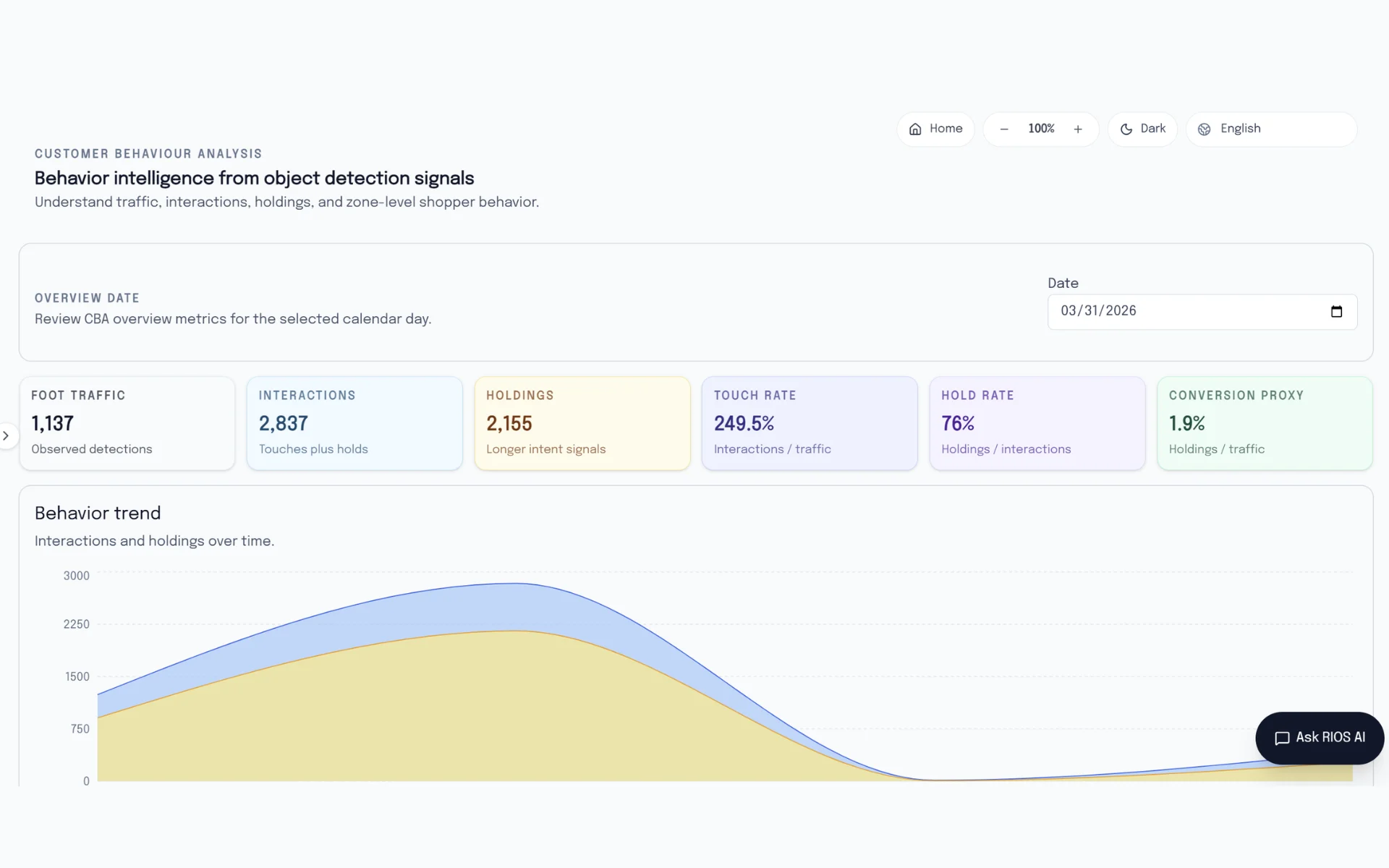
Model outputs were treated as behavior events, then connected to dashboard workspaces for customer behavior analysis, sales analytics, inventory control, and AI-assisted reporting.
Converted raw detections into structured retail behavior events.
Linked behavior signals with sales, inventory, and decision-support logic.
Designed dashboard workspaces for live vision, heatmaps, revenue metrics, stock status, and AI summaries.
Focused on turning labels such as touch, hold, and item removed into business meaning.
Dashboard workspace for behavior analytics, sales, inventory, and decision support.
Customer behavior analysis workspace for shelf-level monitoring and insight.
09
Edge camera exploration
ESP32-S3-CAMedge inputIoT exploration
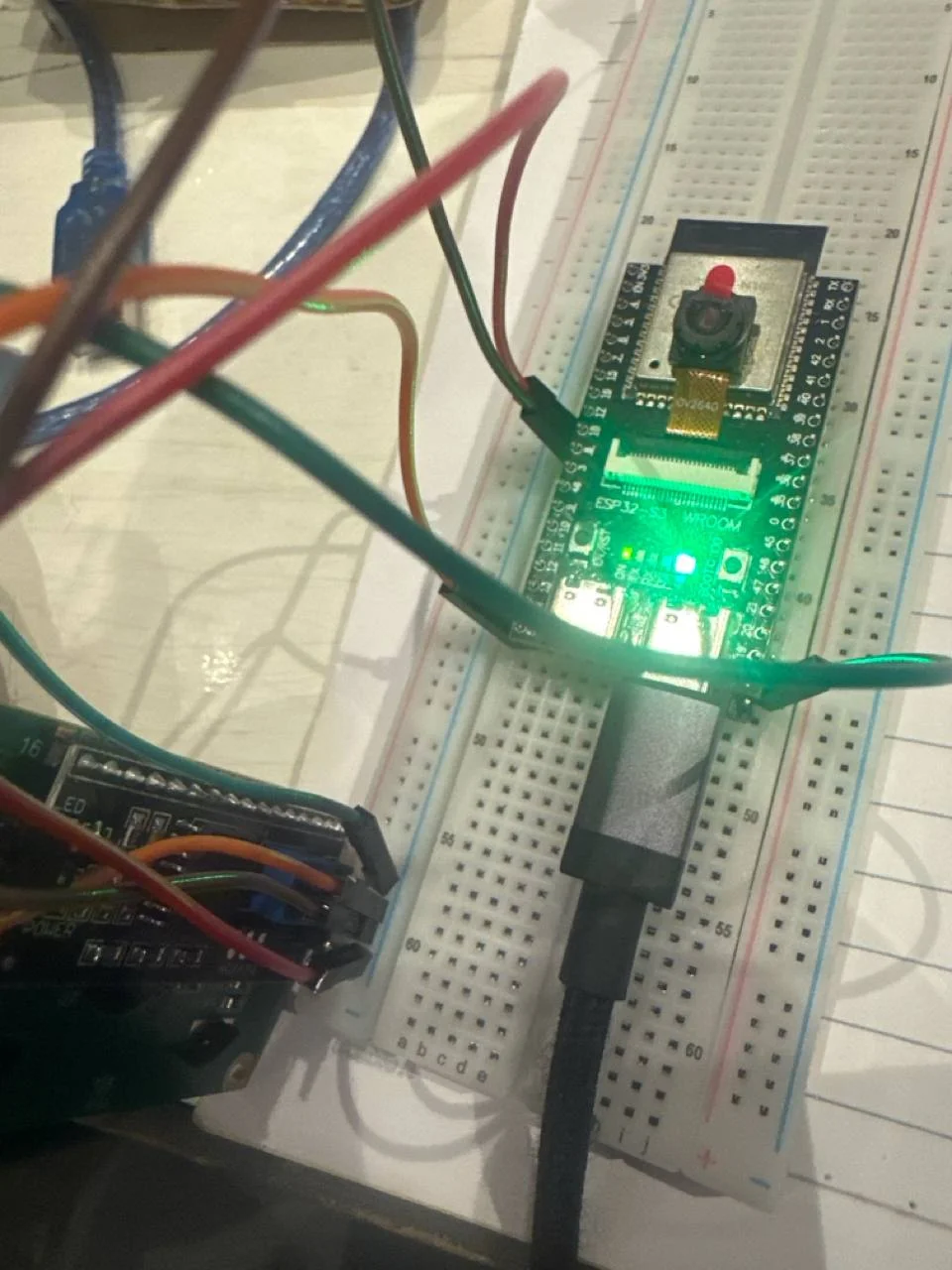
RIOS also explored lightweight camera input using ESP32-S3-CAM as an early step toward edge and IoT deployment.
Explored ESP32-S3-CAM as a lightweight camera source for retail shelf monitoring.
Used the hardware exploration to think about future deployment beyond laptop-based testing.
Positioned edge input as a future direction for lower-cost store-level monitoring.
ESP32-S3-CAM exploration for lightweight camera input and future edge deployment.
10
Build Stack
The stack combines computer vision, backend APIs, dashboard UI, database storage, analytics workflows, and edge-camera exploration.
The hardest part was not only building separate layers, but making computer vision, retail data, dashboards, and AI reporting feel coherent as one decision system.
Touch and hold actions can be visually similar, making behavior labeling and evaluation difficult.
Limited dataset size, class imbalance, occlusion, and camera angle consistency affected model generalization.
Computer vision labels are not valuable by themselves; they become useful when connected to business outcomes.
Integration is not only about connectivity. It is about interpretability.
The model is not the product. It is the signal generator for the system.
12
Future direction
live inferencealertsrole-based views
The next version would focus on stronger live inference, better signal quality, and more operational workflows for real retail environments.
Connect live CV inference directly to streamed dashboard updates.
Strengthen correlation between shelf behavior and downstream transactions.
Add alerts for low conversion, stock pressure, and placement anomalies.
Support richer store maps, shelf zones, and product-level event tracking.
Improve edge-device and IoT deployment readiness.
Add role-based views for store managers, merchandisers, and inventory teams.
RIOS showed me that detecting behavior is easier than making it meaningful. The real value comes from designing a system where behavior signals can be interpreted alongside sales, inventory, and operational KPIs.
The strongest direction was treating RIOS as a decision system, not just a model or dashboard.
The project improved my understanding of behavior -> insight -> action system design.
The main lesson: a model becomes more useful when its output is connected to real workflows.